
The Controlled Warmth

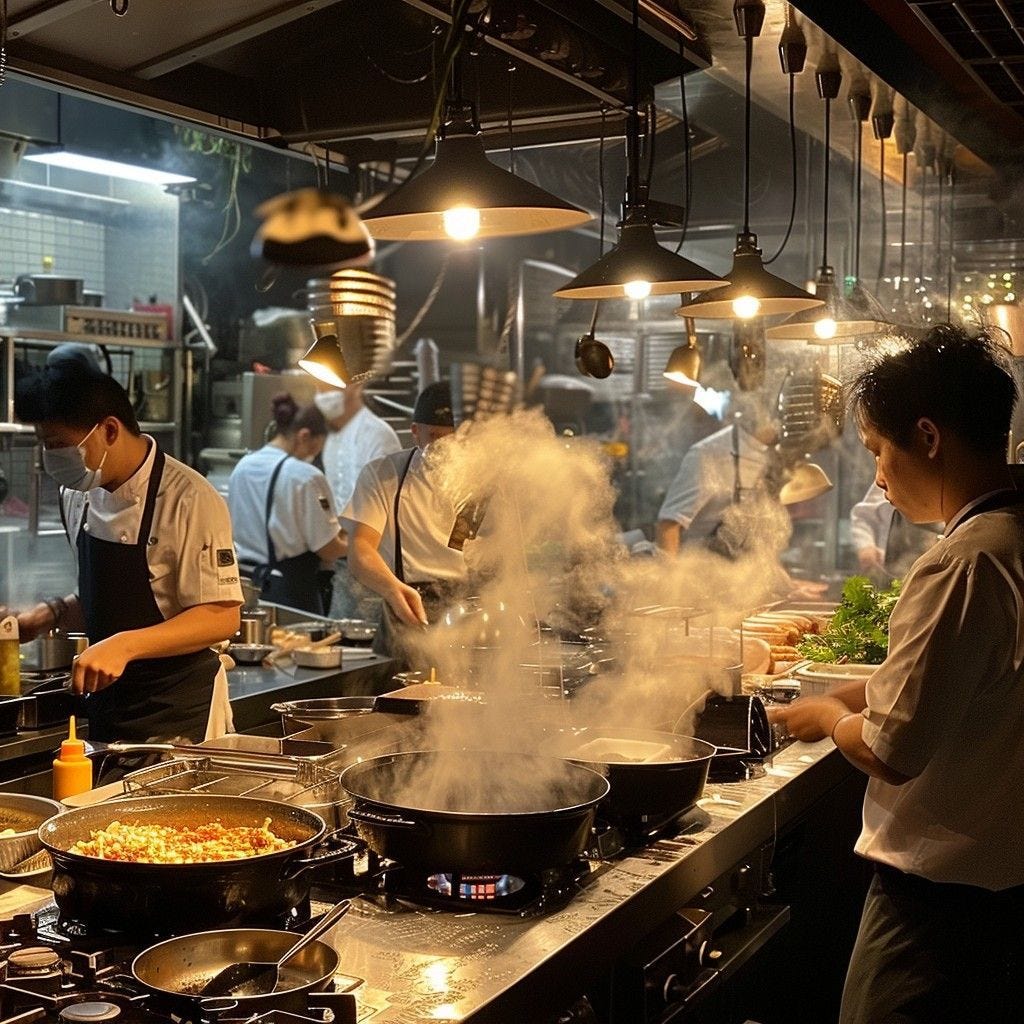
He told the story with pride. He’d come in sick, he said, really sick, the kind where you have no business being anywhere except horizontal. But there were deliveries that week that could have broken the company, and his boss needed him, so he came in. He said this the way people say things they want you to admire. His voice had that particular weight of a man who has decided his sacrifice was noble.
That was eighteen years ago.
He is still there. Still running the urgent deliveries and still giving that speech to the new ones who arrive with their ambitions and their sleeping patterns intact.
I have been inside enough of these spaces to know the pattern, though knowing it has never once helped me break it. That is the confession I have to place here, early and precisely: I was not a bystander in these environments. I was sent in as someone who could see clearly. I had the professional distance, the outside eye, the mandate to identify what was wrong and propose what could be better. And in each one, I also had a friend. Someone I knew by name, whose life I knew in pieces, whose voice I could hear when they complained and when they defended the same space in the same breath.
I never once remedied it. Not a single time.
These spaces do not look like traps. That is the first thing to understand. They look like they belong.
There was a business where the owner and his brother ran what I can only describe as a very controlled warmth. They had a beach house. A summer residence, the kind that signals something about a family’s standing. Once a month, they would invite a selection of employees for an evening there. By every account, these were wonderful nights. Good food, easy conversation, the feeling of being welcomed into something private.
But the evenings were designed. Not spontaneously generous, designed. The relaxed setting was the mechanism. People’s guards came down. They talked about their frustrations, their ambitions, the things they wished were different. They confessed, the way you do when you feel safe. And the hosts listened warmly, filed everything, and used what they gathered to shape the following weeks. Some employees left those dinners convinced they had become indispensable. Inner circle. The ones who would carry the torch.
“The least we can do is be there for them when times are tough,” one of them said.
“I know they think highly of me,” said another. “They’re investing a lot in my career.”
This is what manufactured hope sounds like from the inside.
In another workspace, a one-man operation in the most literal sense, the entire company’s day was built around a single man’s arrival. The team would come in at seven-thirty with an agenda. By the time their boss walked through the door, that agenda no longer existed. He would reassign tasks on the spot, as if the morning’s work had simply been waiting for his direction to become real. The team would absorb the disruption. Some complained quietly, some vented to each other, but by the next morning, the same pattern would repeat with the same compliance. You would hear it in the corridors: I have to stay an extra hour today. I will miss my appointment. I need to come in on Saturday to catch up.
And the boss knew. He relied on it. He had built a machine that ran on a very specific fuel: people who believed their sacrifice was temporary, that things would settle, that the next month would be different. It never was. But the belief renewed itself, which is all the machine required.
وَزَيَّنَ لَهُمُ الشَّيْطَانُ أَعْمَالَهُمْ فَصَدَّهُمْ عَنِ السَّبِيلِ
“And Satan made their deeds seem beautiful to them and diverted them from the path.” (Surah An-Naml, 27:24)
This is not a verse about dramatic corruption. It is a verse about the slow decoration of a situation until the situation looks like something else entirely. Until the cage looks like a home. Until the leash feels like loyalty. Until the man who came in sick eighteen years ago is still telling that story, and has forgotten to ask why he is still running the same deliveries.
These spaces are not built on cruelty. That would be easier to name and leave. They are built on something more durable: the appearance of care. The compliment that comes without the acknowledgement of what the work actually saved. The reward that arrives without the words that would give you leverage to ask for more. The dinner at the beach house feels like family, but functions like intelligence gathering. The promotion of belonging without the guarantee of security. You are made to feel appreciated enough not to look elsewhere, and given just enough hope to believe that looking elsewhere would be a mistake.
What makes these environments almost impossible to remedy from inside them is the routine. Not the work itself, but the rhythm. When you have structured your entire life around a space, when your schedule, your identity, your sense of being needed have all been absorbed into the machine, stepping back to see the machine clearly requires a distance the machine never permits. The routine is not accidental. It is the mechanism.
There was a man who, when he finally left one of these businesses, told me it took him years to understand what had happened to him during his time there. Not the obvious things. The subtler architecture. His fiancée at the time had been quietly discouraged. Not directly asked to leave. Just made to feel like a distraction from something more important. He left her. He stayed. A decade later, he still described it as the most elaborate psychological manoeuvre he had ever experienced. He still felt played. The word he used was exploited.
He said it without anger, which was the thing that stayed with me. Just a kind of weary lucidity, the way people talk about something they have finally understood but cannot undo.
I have noticed something across these environments. The people who run them tend not to pass anything on. Not one of these operations became a second-generation business. The torch was never handed to anyone, because the torch was never meant to be shared. It was only meant to be held up as something you might one day carry, if you stayed, if you proved yourself, if you continued giving what the machine required. The carrot was always on a string. The string was always moving.
They appear in a chapter of a timeline, and they leave. Sometimes the business closes. Sometimes the owner retires, and the whole structure dissolves because it was never a structure at all, just one person’s need for control, given the architecture of a company. What they leave behind is a group of people who gave years to something that could not give anything back, and who are often the last to understand this.
I said I never remedied it. I want to be precise about what that means.
I could see the mechanism. I could name it in my notes, map it on paper, describe it in reports that went nowhere. What I could not do was reach the people inside it. Not because they were unintelligent. Because the web was too embedded in their daily lives, their sense of self, and their friendships within the walls of the same place. The friend I had in each of these spaces was also the reason I understood the depth of it, and also the reason I could not fully extract what I was seeing into a conversation they were ready to have.
These pieces only make sense from the outside. That is not an excuse. It is the most honest thing I can say about why they are so difficult to touch.
If you are reading this and something is recognisable, I am not telling you to leave. I do not know your situation. I know that bills exist, that responsibilities do not pause for clarity, that leaving is not always a choice available in the moment you realise it might be necessary.
But I am asking you to notice. To name what you are seeing. To hold the distance between what you are told and what is actually guaranteed. Between the warmth of belonging and the reality of what the space gives back when you most need it to.
The man who came in sick is still there. Still proud. Still, certain it meant something. I genuinely hope it did. I hope it was worth eighteen years of urgent deliveries and a speech that the new ones no longer believe.
But I suspect he has not asked himself that question. Not because he is not capable of it.
Because the machine runs best when you don’t.
Thanks for reading Within the Margin of Error! I truly appreciate you taking the time to read my words. I hope I was able to bring you some value in exchange.
Keep creating