
Sufficient

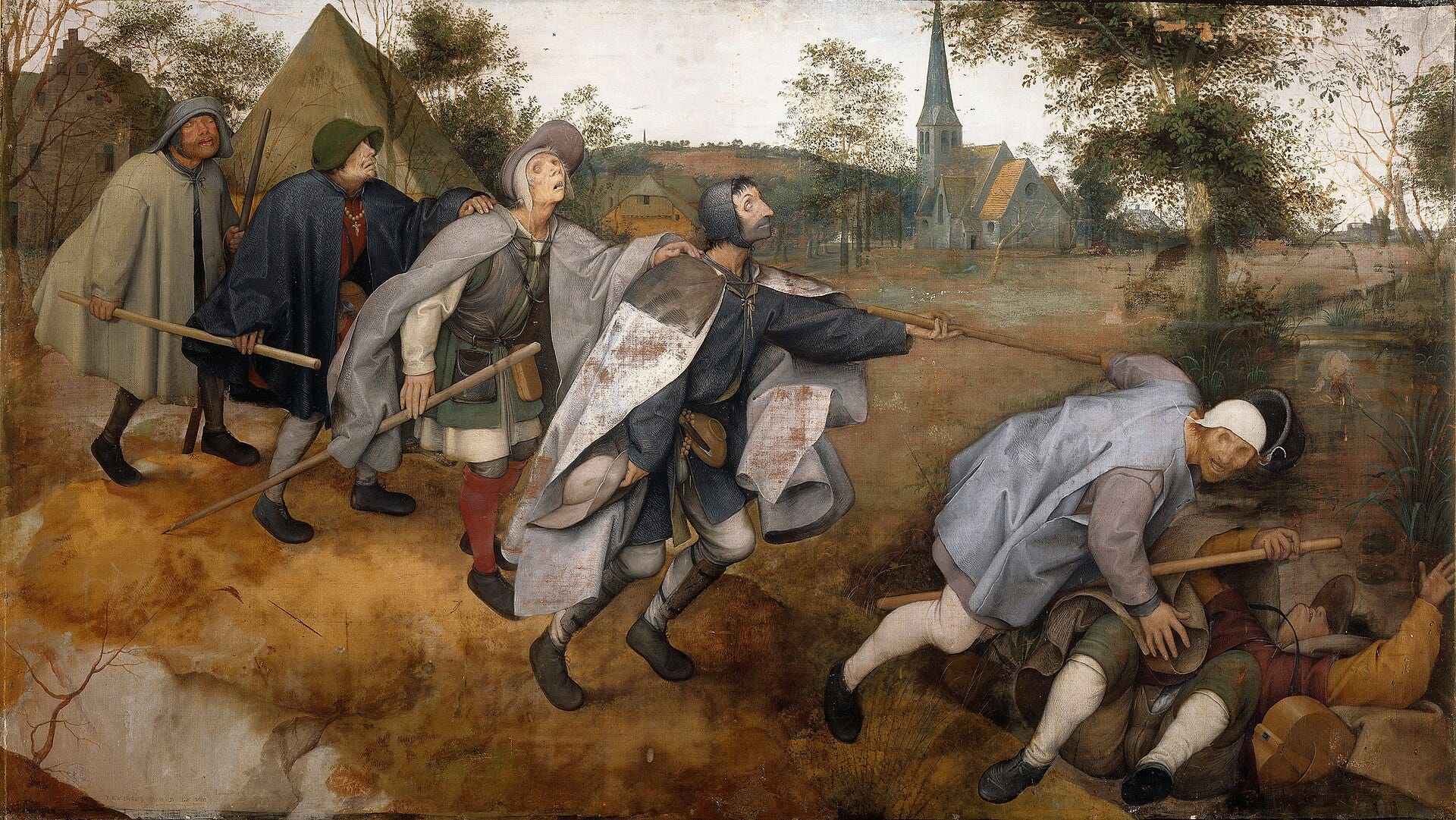
There is a moment in the iqama, the second call before prayer, that most people I know get wrong. Not wrong in a way that would draw a fatwa. Wrong in a quiet, accumulated way. The line is قد قامت الصلاة, and it is at that line, exactly that line, that the rows should form behind the imam. Not before. But walk into almost any mosque and you will see the congregation rise the moment the iqama begins, shifting feet, straightening shoulders, shoulder to shoulder before the call has even reached its instruction.
I noticed this some years ago and made the mistake of mentioning it to someone. The response was not curiosity. It was something closer to an offence. Where did I get that from? Could I prove it? The question was not asked in the spirit of learning. It was a challenge, a defence of a practice so old and so shared that questioning it felt like questioning the people who had done it. His father had stood this way. His grandfather, too. The mosque he grew up in, the one his children attend now, is a place where everyone rises at the same moment. What was I suggesting exactly?
I was not suggesting anything about the people. I was asking about the act. But by then those two things had become the same.
My grandmother had a rule about the iftar table. You sat down before the athan. Not after, not at the sound of it, but before, food in front of you, waiting. This was discipline in her understanding. To see the meal, to smell it, to feel the pull of hunger, and to hold still. There was dignity in that stillness.
A friend of mine grew up with the opposite instruction. In his house, sitting at the table before the athan was considered impolite. It signalled impatience, an unseemly eagerness to get the fasting over with. You came to the table when the call came, not a moment before.
Both families were observant. Both instructions were delivered with complete sincerity. Neither had anything to do with the sunnah, though both would have insisted otherwise if pressed. They were rituals, inherited without examination, wrapped over time in the texture of religious obligation until they felt like the same thing. العادة wearing the face of العبادة.
The uncomfortable part is not that two families had different customs. The uncomfortable part is that neither family knew that is what they had.
I worked for some years in a family-run business, most of them first-generation, all of them built around the authority of one person who had started with nothing and arrived somewhere through will and instinct and decades of accumulated decisions. There is something genuinely impressive about that. There is also something that calcifies and stiffens inside it.
I sat with one owner, a man who had built his company over thirty years, and walked him through a case for middle management. Not a complex argument. The risks of a single decision-maker at that scale, the ceiling it put on growth, and the cost of information that never travelled upward because there was no structure to carry it. He listened. Then he said: This is the way it has been since the beginning, and we are still here, aren’t we?
He was not being evasive. He was being honest. The proof of the method was the company’s existence. That the company might have been larger, or healthier, or more resilient under different conditions was not a question he had any reason to sit with. The evidence for his approach was everywhere around him. The evidence against it was absence, and absence does not announce itself.
I have thought about that man often. Not because he was unusual. Because he was the clearest version of something I have also been.
I joined a team once that I believed would teach me things. It did. What I did not expect was how quickly I would stop receiving the teaching. Not because the team stopped offering it, but because I found the areas where I was ahead and began, slowly, to settle there. I brought value. I earned my place. And I used both of those true things to avoid looking at the places where I was still behind.
I do not think I knew I was doing it. That is not an excuse. It is the more troubling version of the story. The arrogance was not declared. It arrived dressed as competence, as confidence, as the reasonable comfort of a person who had figured some things out. And the team, good enough to know when something was off, extended me an exception they would not have extended anyone else. Not because their standard dropped. Because our friendship complicated the geometry. They absorbed what they would have acted on decisively had it been anyone else. The flow suffered. Quietly, not catastrophically, but enough. And I never once said: treat me the way you would treat anyone else. I stayed inside the shelter of being known and let them pay for it.
It took leaving to see it. Not a dramatic departure, just the ordinary distance that comes when you are no longer inside a thing. From that distance, I could look back at what I had held onto past its usefulness, what I had defended not because I had tested it but because it was mine, because I had arrived with it and it had served me once and I had never once asked whether it was still serving anyone else.
وَإِذَا قِيلَ لَهُمْ تَعَالَوْا إِلَىٰ مَا أَنزَلَ اللَّهُ وَإِلَى الرَّسُولِ قَالُوا حَسْبُنَا مَا وَجَدْنَا عَلَيْهِ آبَاءَنَا ۚ أَوَلَوْ كَانَ آبَاؤُهُمْ لَا يَعْلَمُونَ شَيْئًا وَلَا يَهْتَدُونَ
“And when it is said to them: Come to what Allah has revealed and to the Messenger, they say: Sufficient for us is what we found our fathers doing. Even though their fathers knew nothing and were not guided?”
(Surah Al-Ma’idah, 5:104)
I used to read this and feel nothing personal in it. It described people who had rejected the message. Ancient refusal. Historical record. The comfortable distance of a believer reading about those who did not believe.
Then I started hearing it differently. Not as a description of disbelief but as a description of a mechanism. Of safety found in repetition. Of the discomfort that arrives, sharp and defensive, when something you have always done is examined rather than simply continued.
The people in the ayah were not asked to abandon their fathers. They were asked to check. The response was that what they had found was sufficient. Sufficient. Not true, not examined, not verified. Sufficient. Enough. Familiar enough to hold.
And I began to wonder, not rhetorically, actually wonder, how many of my own sufficients were doing the same work.
What I am most afraid of is not that I have made mistakes. Mistakes have a kind of clarity once you find them. They are evidence of actions. What I am afraid of is the version of this that I have not yet found. The habit in my worship that I have never held up to the light because it has always been there, because my family before me did it this way, because the mosque I grew up in did it this way, because questioning it would feel like questioning them. The working assumption I carry into every room that I mistake for instinct because it has been with me long enough.
I am afraid of reading those ayat about the deaf and the blind and the self-assured, and not recognising myself in them. Not because I am not there. But because that is precisely what the description means.
I do not stop what I am doing when the athan is called. Not because I delay the prayer. The prayer comes, and it comes on time. But the athan itself lands as an alarm now, not as a call. Somewhere between childhood and here, without a single moment I can point to, it became a notification. A prompt. A sound that means something is about to be required of me.
Keep creating
Thanks for reading Within the Margin of Error! I truly appreciate you taking the time to read my words. I hope I was able to bring you some value in exchange.