
I Was There


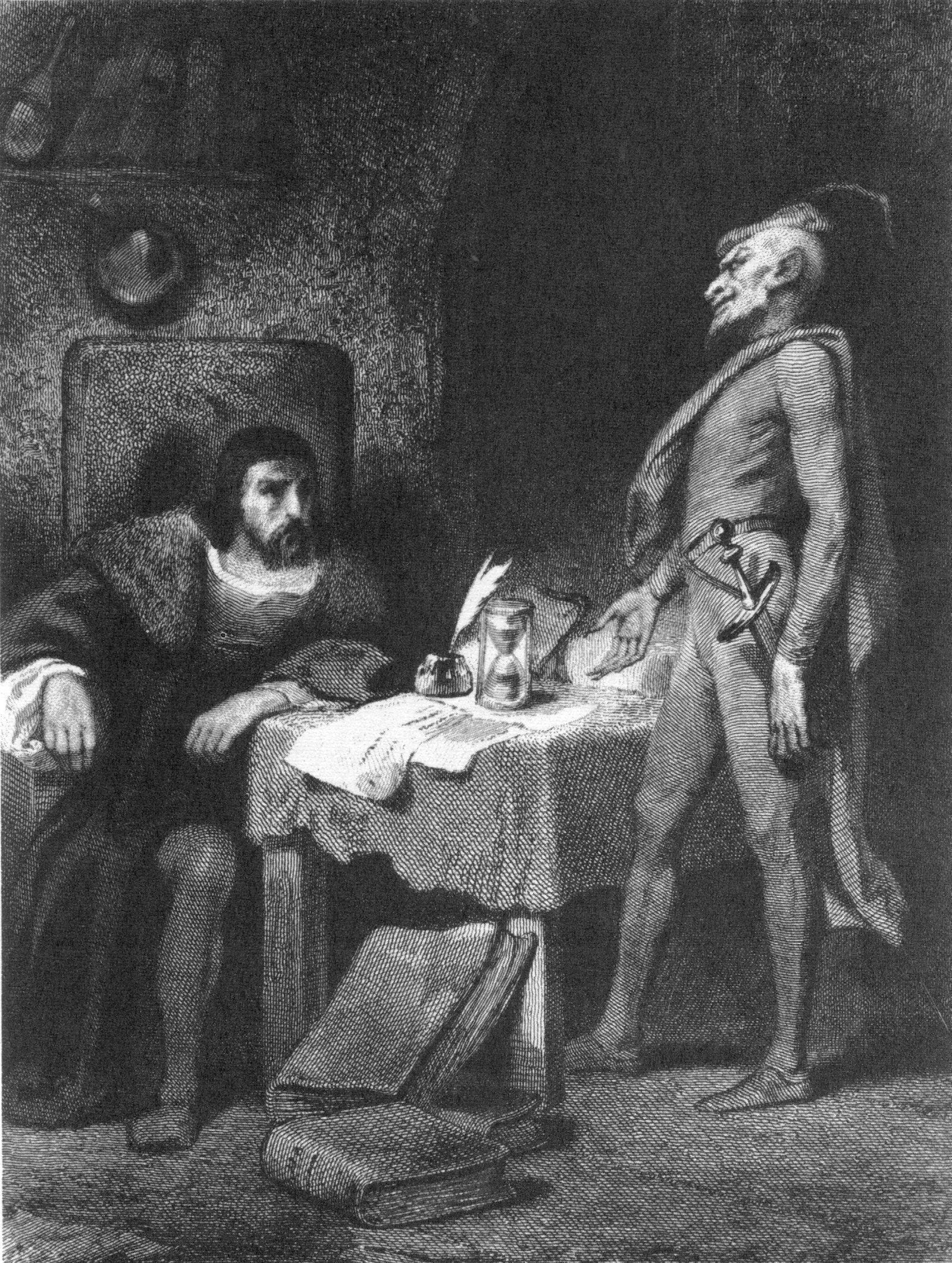
There is a painting by Eduard von Grützner called Mephisto.
The devil’s intermediary sits comfortably, dressed well, looking directly at you. Not menacing. Not grotesque. Almost friendly. The kind of face you’d trust. The kind of presence you’d welcome into your most private conversations.
That’s what makes it terrifying.
Not the horns or the darkness. The familiarity. The warmth. He looks like someone who genuinely cares about you.
I’ve been staring at that painting lately. And I keep seeing faces I know. People I’ve sat across from. People I’ve trusted. People who walked me to the edges I didn’t know I was approaching.
And then, the most frightening part: I see my own face.

I am no stranger to Mephistopheles.
I’ve met him several times, more than I dare to count.
I met him in a meeting at work recently. I saw him at his best. I think he has a permanent advisory chair at a very specific office.
I met him many times on the way to Friday prayer, and right after it.
I saw him, on multiple occasions, in private conversations, where I am told the untold secrets of other people under the title “just so you know.”
I ran into him in several client closing meetings. I ran into him in family gatherings, in friends’ meetups, in social events, and at home.
He is everywhere.
Nicely dressed, eloquent, smart, wise, never pushy, kind and warm. I like to think of him as a male figure, but I have equally seen him in the most interesting female figures.
I don’t know why he insists on showing me his tricks, playing his cards open, and showing me the playbook right after he wins.
Am I too smart? Am I special?
No. Not even close.
I am just another victim. And worse, I am Mephisto in many cases. I see it in my mirror, a projection of what I am capable of, or worse, what I have done.
I sat down once in a one-on-one conversation that was supposed to be casual. Coffee. Nothing formal.
I was in the presence of a good person. Warm, kind in their words, rational. Someone I had come to consider close.
That conversation ended up being a copy of a copy of a copy. A copy of similar conversations I’d had with this person, and conversations I’d seen them have with other people.
They come off as a friend. They walk with you. They reassure you.
They never push you over the edge. They never ask you to look downwards. They never ask you to lie, to betray, to attack. They are your friend.
They merely assure you it is okay.
They walk you down a path where lying is the only way to get through, but they remind you that lying is not part of who you are. They even try to talk you out of it.
Yet this person will walk you to the edge, where you will stand and betray a friend, a coworker, a partner.
They will listen. Hug you. Hold your hand. Give you a shoulder.
They will never act, ask, or demand.
And when it is all done and said, they will walk away, slowly fading out of the memory. A memory of an incident only you created, acted upon, willingly.
He never asked me to skip a prayer. He is the first to remind me it is prayer time. He is the one ahead of all of us. He is the example we all look up to.
He gets ready for prayer time, asks you to get ready yourself, and slips in a casual follow-up on a conversation we had before. Comes off sincere, concerning, genuine. Nothing out of the ordinary.
That conversation went beyond a word. It became three. But it stops because it was prayer time. We stop talking. We pray. We finish. We shake hands and walk out of the mosque.
But then, just as it ended, another word came as a follow-up. The conversation continues.
You could have asked for it to wait, but we don’t. It is a casual chitchat.
He never asks you to stop praying. Never asks you to be late. Never asks you to put it second in your priorities. He only manages to make you disconnect from the moment. One conversation at a time.
He doesn’t push you, nor threaten you. He asks you an honest question, and you, willingly, answer.
He walks beside you as you walk out of Barakah (or blessing). He is right there with you. Never pulling or pushing. Just ensuring you walk out.
He would then walk away, let go of your hand, without you paying attention.
He never wanted you to stop what you are doing, nor reshuffle your priorities, nor did he want you to doubt your commitment to prayer. He only walked you down a path that turns those moments into basic ritual, errands, something to do and move on and feel accomplished.
He wanted you to lose the essence of why you’re praying, without making you stop praying.
Then there was the time I watched him walk someone into a path of anger.
He was there listening, warmly confirming every word said. Words said in anger, in gossip, in retaliation.
He even reprimanded against retaliation. He talked him out of betrayal. He validated how good a person someone was, how righteous he was.
He left him full of pride. On how he took the higher ground. How is he the better of the two.
The moment of pride. When you feel right, pious.
With a tiny trick left in that bag.
He ensured the two were not reconciling their differences. He left them enemies. And left one of them feeling like a righteous man, a pious man.
He had a tiny new trick here. A new tool.
It was me.
I was there. I was the voice. I was the listener. The nodding head.
I wasn’t just watching. I was the one speaking. The one validating. The one who talked him out of retaliation while ensuring, quietly, that he’d never reconcile.
I made him feel righteous, pious, free of anger.
And I made sure the door to reconciliation stayed closed.
I didn’t see it at the time. I thought I was helping. I thought I was being the reasonable voice, the calming presence, the one who reminded him of his values.
It was only later, much later, that I realised what I’d done.
The horror is in retrospect.
You don’t see it while you’re doing it. You think you’re being helpful. Supportive. A good friend. A wise counsellor. Someone who listens without judgment.
You think you’re walking beside someone, not leading them anywhere.
But then you see your face in other people. Acting as soldiers in this game.
You watch someone do to another person exactly what you did. The same warm reassurance. The same careful validation. The same subtle walk to the edge where betrayal feels like righteousness.
And you recognise the playbook.
Because you wrote it. You’ve used it. You’ve been Mephisto in a nicely tailored suit, offering comfort and ensuring destruction.
The Quran warns about this constantly.
The nafs. The self that inclines toward evil. The voice that whispers in a way that sounds like wisdom.
Shaytan doesn’t come with horns and threats. He comes with reason. With validation. With concern for your well-being.
He reminds you to pray, then ensures you pray without presence.
He talks you out of anger, then leaves you full of pride.
He never asks you to betray, he just walks you to the edge and watches you choose it yourself.
And the most dangerous part: he can work through you.
You become the voice. The reassurance. The friend who walks someone to destruction while appearing to care.
The Prophet (peace be upon him) said: “The devil flows through the son of Adam like blood.”
Not beside you. Through you.
I don’t have a resolution for this.
I can’t tell you I’ve stopped. I can’t tell you I’ve figured out how to recognise it in real-time and pull back.
I catch myself sometimes. Mid-conversation, I’ll feel it. The way I’m validating someone’s anger is just a bit too enthusiastically. The way I’m offering comfort is actually ensuring they won’t take the harder, better path. The way I’m being supportive in a way that serves my interests, not theirs.
But most of the time, I only see it in retrospect. When it’s too late. When the damage is done. When I look back and realise I was Mephisto in that moment, dressed warmly, speaking kindly, destroying quietly.
The painting haunts me because it doesn’t show a monster.
It shows someone familiar. Someone you’d trust. Someone who looks like they genuinely care.
Someone who looks like me.
If you’re reading this and recognising yourself, if you’ve been the warm presence that walked someone to betrayal, if you’ve validated anger into pride, if you’ve offered comfort that ensured destruction, I don’t have good news for you.
You can’t unsee it once you see it. You can’t unfeel the weight of realising you’ve been the devil in someone else’s story while thinking you were being a good friend.
That may be the point.
Maybe the work isn’t to stop being capable of this. We’re all capable of this. Maybe the work is to stay vigilant. To catch yourself mid-sentence and ask: whose interests am I serving right now? Am I helping this person find their way, or am I walking them to an edge?
To watch for the moments when your advice sounds wise but leads to destruction.
To recognise when you’re talking someone out of something while ensuring they’ll do it anyway.
To see your own face in that painting and understand what you’re capable of.
The devil doesn’t always announce himself. Sometimes he sounds like your own voice, offering what feels like wisdom, friendship, care.
And sometimes, when you look in the mirror after certain conversations, you recognise the face looking back.
Nicely dressed. Eloquent. Warm.
Mephisto.
Thanks for reading Within the Margin of Error! I truly appreciate you taking the time to read my words. I hope I was able to bring you some value in exchange.
Keep Creating.